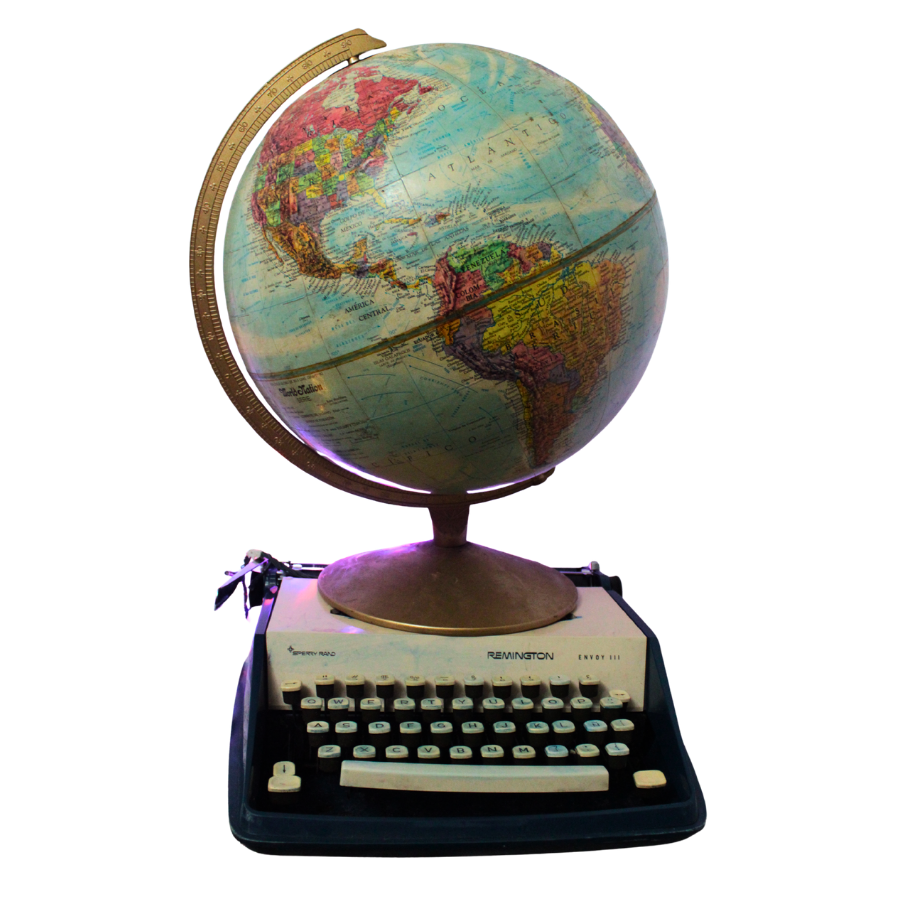
Being an only child is the perfect setting to get fascinated by videogames. No one else in the house knows how to use the computer, you have access to the internet for cheatcodes, you live in Latin America: land of piracy (and piracy=access). I remember vividly the first time I played (but mostly saw my friend playing) a graphic adventure, point and click style. It was a spanish game called “Hollywood Monsters”, when a sort of Scully and Mulder type couple have to solve a mystery around a murder in a party full of…Hollywood Monsters (Frankensteins, Werewolves, Draculas, etc). I remember exactly the smell and taste of fried corn in a bag, and the sensation of dipping my fingers into my friend’s mother ashtray, often being nagged by her because actually, yes, it was disgusting. I loved it because it made me think hard in problem solving. Playing graphic adventures changed and developed my intellectual capacities for good, something that my father nourished through all my childhood by challenging me to riddles, complex puzzles, and introducing me to chess. Both my father and the internet (and piracy) created who I am.
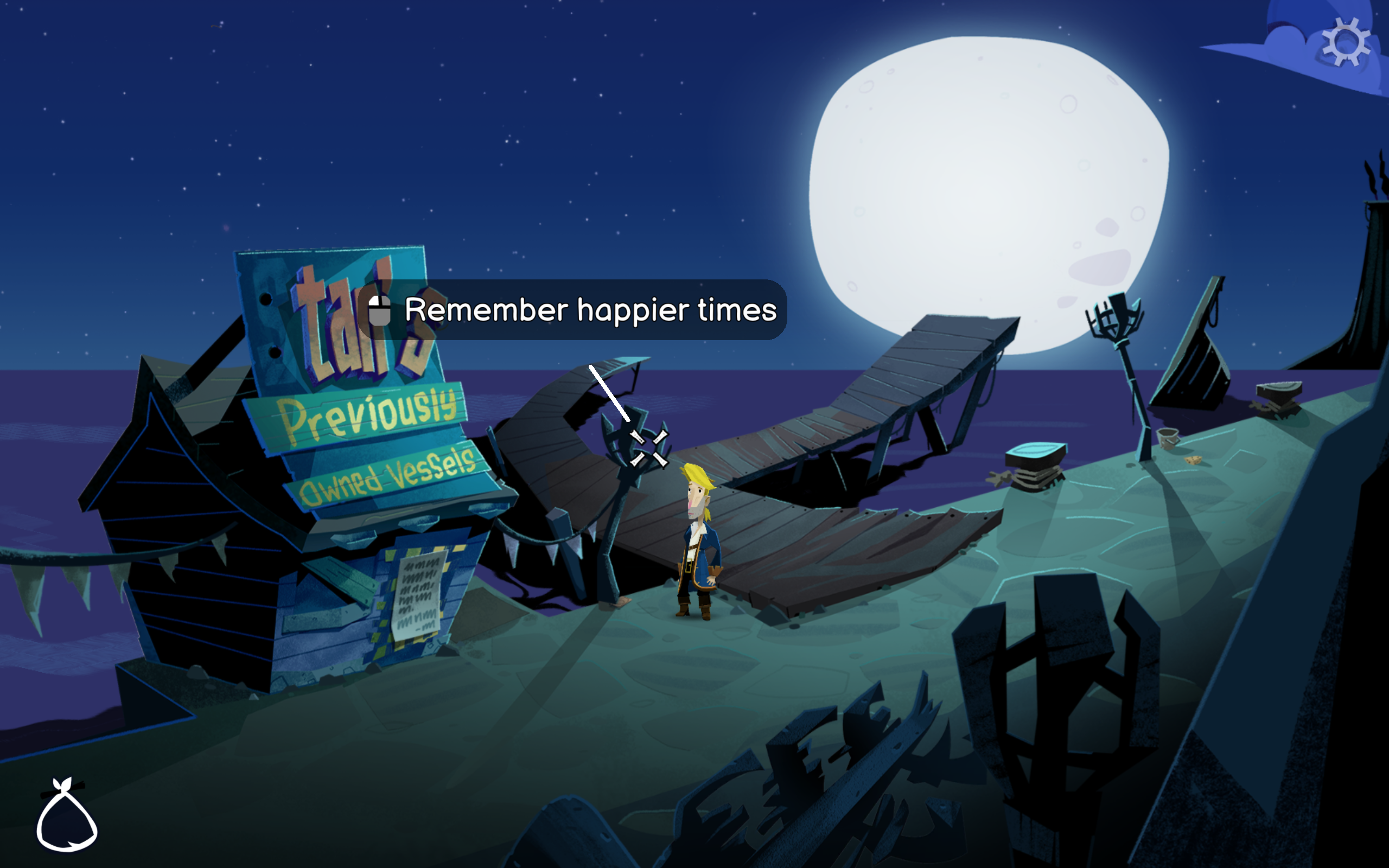
Then, in a perfect day, on a perfect visit to my friend, just in the right moment, she inserted in the computer the pirated cd of ‘The Curse of Monkey Island’. And I met a friend who would be at my side for years: Guybrush Threepwood. He immediately entered my heart, with his funny voice on the Spanish dubbed version. My first encounter with a Caribbean so close to home, but so far in time that it didn’t even exist. The beaches, the heat, the palm trees, the ambient animal sounds: it was all familiar to me. It felt like a version of me existing in another time and being a pirate, sailing from Venezuela. Thanks to piracy I met my favorite pirate: Guybrush. And my heroine and role model: Elaine Marley. I spent weeks, months, years playing all the Monkey Islands I could physically find, then I discovered internet piracy; and things got a lot better. Now, I no longer just had access to Monkey Island, I had access to Maniac Mansion, Full Throttle, Sam & Max, The Dig. It was too much, too fun, too perfect. And I enjoyed it so much.
We, in the so-called third world, in a more realistic version of the Caribbean that Guybrush is used to sail, rely very much on piracy. There are plenty of reasons for it, there have been plenty and will be plenty. In my particular Caribbean experience I happen to be in a country where a lot of services, payment options, webpages, and lots of other useful internet stuff are blocked. It is a total restriction of access to things sometimes very useful. I lost an entire webpage of project for something that in the long run turned out to be not such a good idea, but still, from one day to another I received a Hostinger email telling me to backup my web because I’ll be blocked from the system just because of my unfortunate IP location. The same one that didn’t let me access Soundcloud for years, or use ChatGPT or Claude or read the online newspapers from my own country and abroad. Using VPNs proved useful to a point, but specially in the subscription and payment forms I always ended up in a point of no return. I’m not saying this to justify my piracy habits: I’m proud of them, they made me who I am. Learning to download, install, share, crack, copy, upload software made me advanced in tech-savviness in comparison to the people around me, it gave me an advantage, or to put it more nicely: a superpower.
Through the immense ocean where the web floats in, I went through bays, torrents, wav(e)s. Navigating those worlds seemed like having a magic key that opens doors to spaces that are not visible for everyone. We, possessors of the key, had the responsibility of getting that information and sharing it. Traveling with a pendrive to my best friend’s house very far from home just to get in his car, plug it, and listen to the new St. Vincent record, hipster stuff like that. That .wav then went to his computer, and then to another pendrive of another friend, and then that friend uploaded it to mediafire and sent it to someone in Chile. It was not only the access through the digital world, piracy also existed inside physical objects (as nothing digital can exist by itself), and that information was shared and open for anyone to access. That file could be the best movie you ever saw, the song that made you start a band, or the software that became your job years later.
Piracy can mean a lot of things or can be associated to many terms:
- Piracy: Illegality
- Piracy: Freedom
- Piracy: Robbery
- Piracy: Copyright
- Piracy: Art
- Piracy: Sharing
- Piracy: Crime
It is, objectively, all those things at the same time. It is good AND bad, it violates IP at the same time that gives access to it to people who would otherwise can’t use it or consume it. It is, like all things, a complex matter. I personally don’t have any issues or guilt about it. I feel in some way grateful for having the knowledge on how to pirate anything and I use it to be a better artist, to get inspired, and to make my life better overall with all those tools that someone, somewhere decided I can’t have access to. It is my way to reclaim my rights as a human who uses a computer.
If buying isn’t owning, piracy is not stealing.
In the present the fact that we pay for something (be it paying for a streaming platform to consume anything on it, or buying directly a digital product “for life”) doesn’t guarantee that we will have access to it forever. We have neither a physical object to cherish and keep safe nor a real digital file that we can cherish and back up. We depend on digital platforms to consume and use a lot of things that:
- Losing access to the internet makes them no longer available.
- Depends on the good functioning of the platform, their online stability.
- We don’t know when someone (or something like a machine) will decide we no longer should have access to it.
Paying doesn’t mean anything anymore, at least not paying for the platform itself. It is a completely different case with independent/individual creators, where we know the creator receives at least a large % of the purchase. Bandcamp is the best example: You pay for the files (and in many cases even a physical product), a decent percentage of that money goes to the musician, and voilà: both the musician and the consumer have what they want, forever. It is that simple, but tech platforms have convinced us that it is an anomaly, and we fell for it.
If I can’t have the certainty that the thing I’m paying for will be mine forever, I’m not buying anything really. So, if I pirate something, I’m not really stealing since that thing, even if I pay for it, isn’t really mine. If Kindle disappears tomorrow, I don’t have the book files I paid for, but the hundreds of books I downloaded are safe in my hard drive and backed up, and even more: I can share them with people without paying a dime.
And PLEASE don’t get me started with pirating books and the library shortage in Venezuela, that would release the Cthulhu in me.
In the end Guybrush and I aren’t so different. We’re both pirates in our virtual seas.